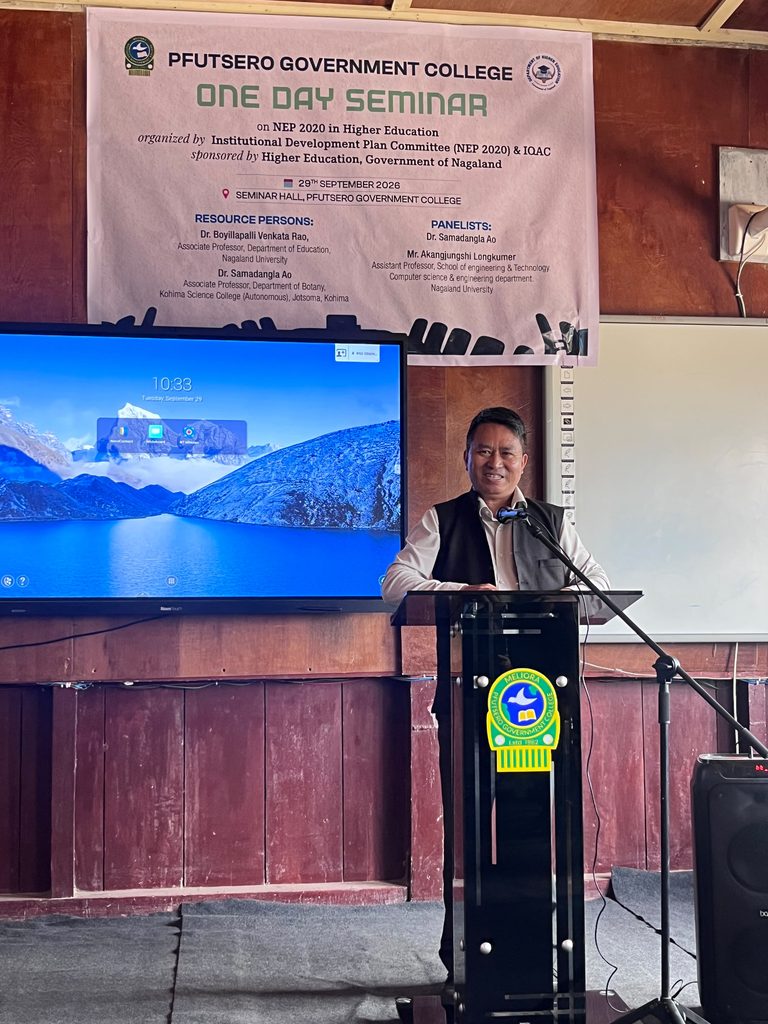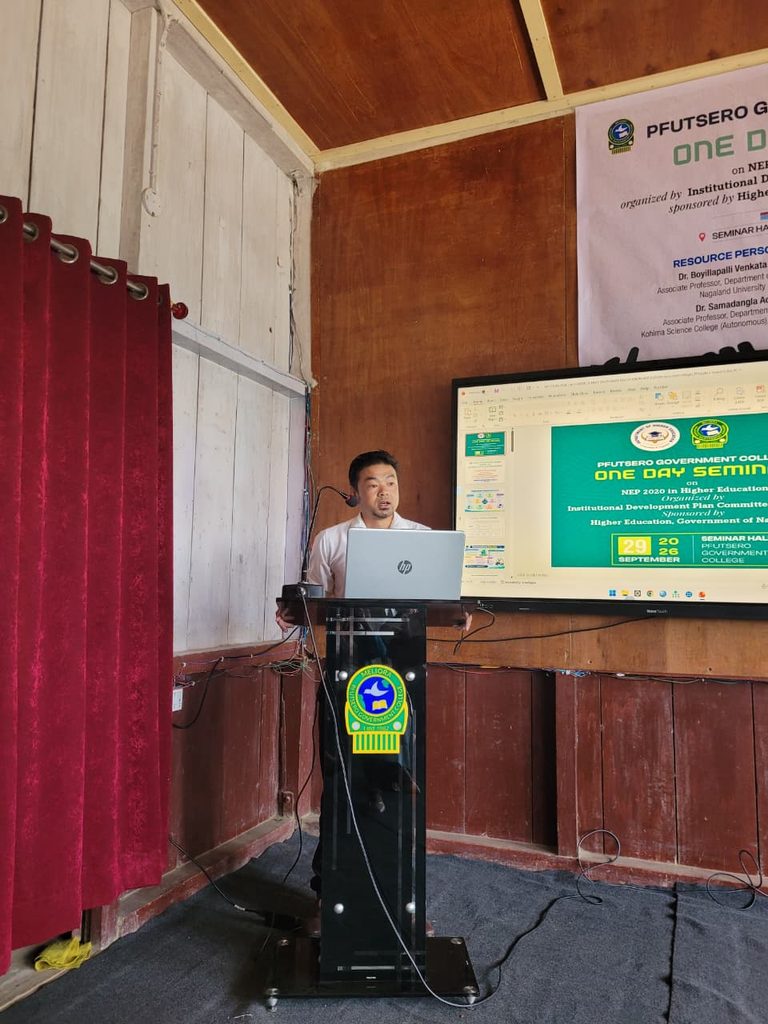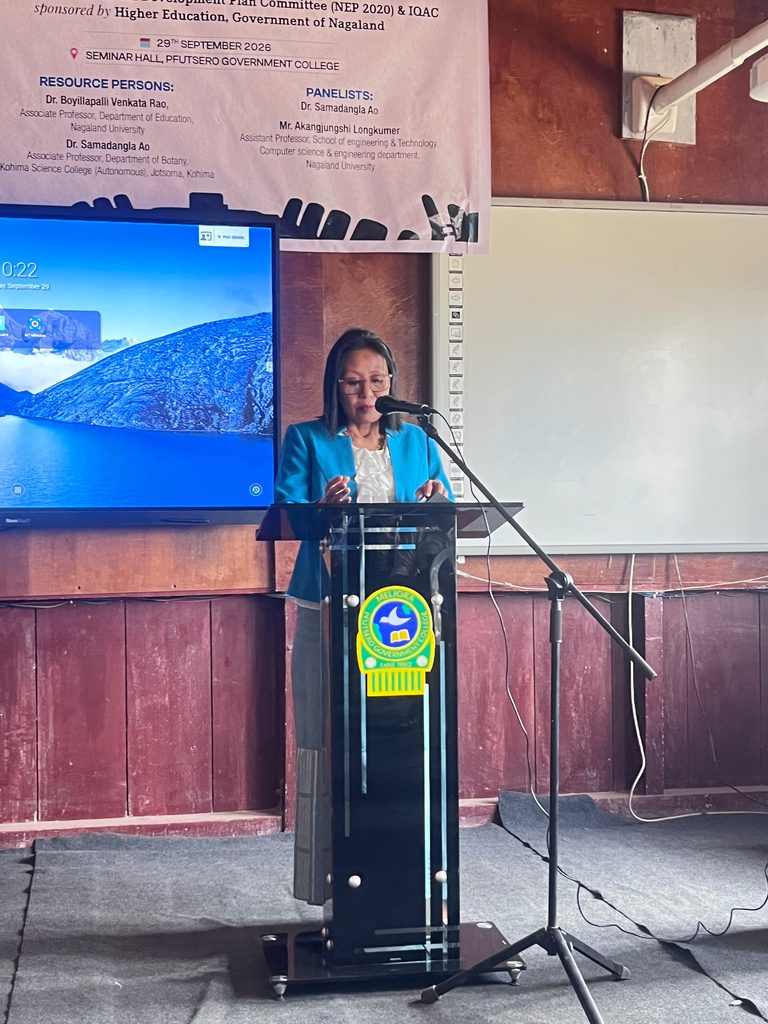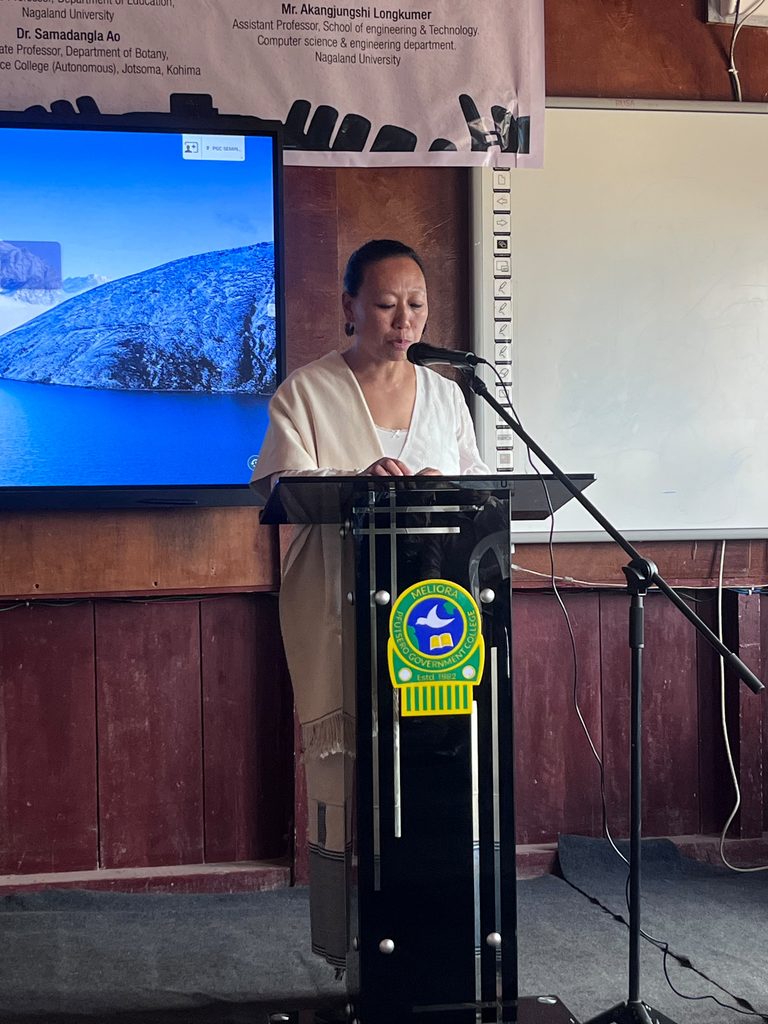
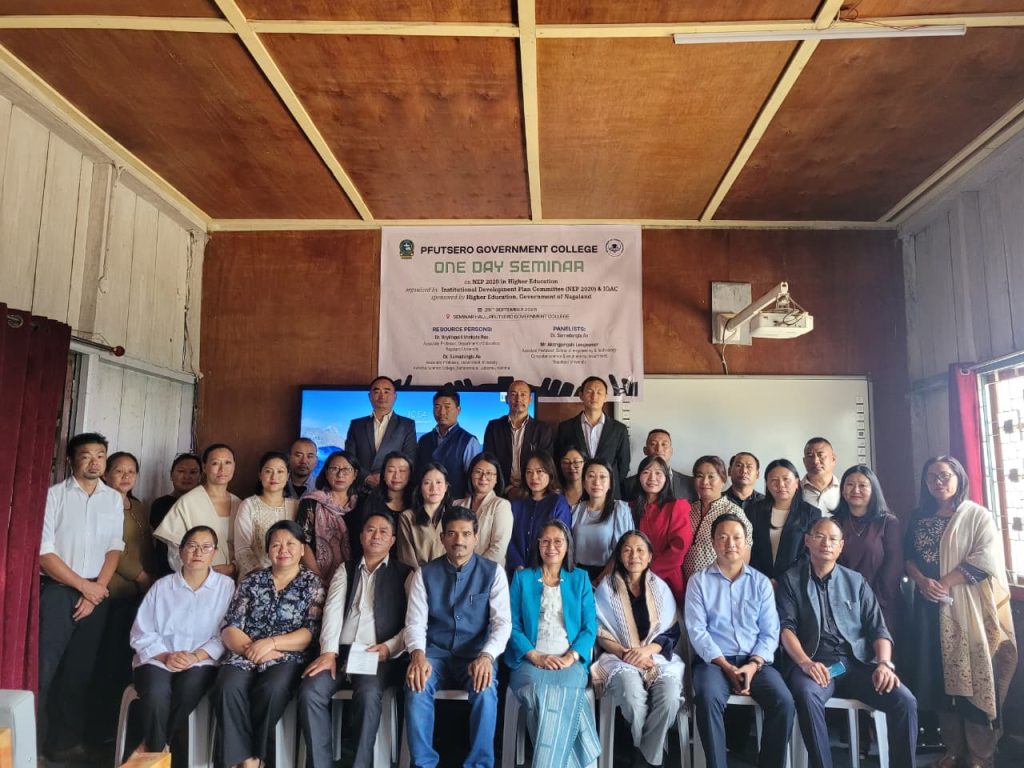
Pfutsero, September 29: Pfutsero Government College (PGC) organised a seminar on the National Education Policy (NEP) 2020, focusing on holistic and multidisciplinary education, implementation strategies, research innovations and digital learning.
The programme began with the inaugural session chaired by Dr. Wetsou Medo, IDPC (NEP 2020), Nodal Officer. The welcome address was delivered by Dr. Anungla Pongener, Principal, PGC, while Dr. Medongoi Rhakho, Joint Director, Higher Education, presented the concept note. The inaugural session concluded with a vote of thanks by Ms. Vesatolu, Assistant Professor, Department of English.
Presenting the concept note, Dr. Medongoi Rhakho highlighted the need to move beyond the conventional education system inherited from the British model and develop a more student-centred and inclusive system of education. He emphasised that education should not create a distinction between “winners” and “losers”; rather, the system should enable every student to succeed by recognising individual abilities, interests and potential.
He added that the “cafeteria approach” in education can provide students greater freedom to choose subjects, courses, activities, and learning options based on their interests, abilities, and career goals.
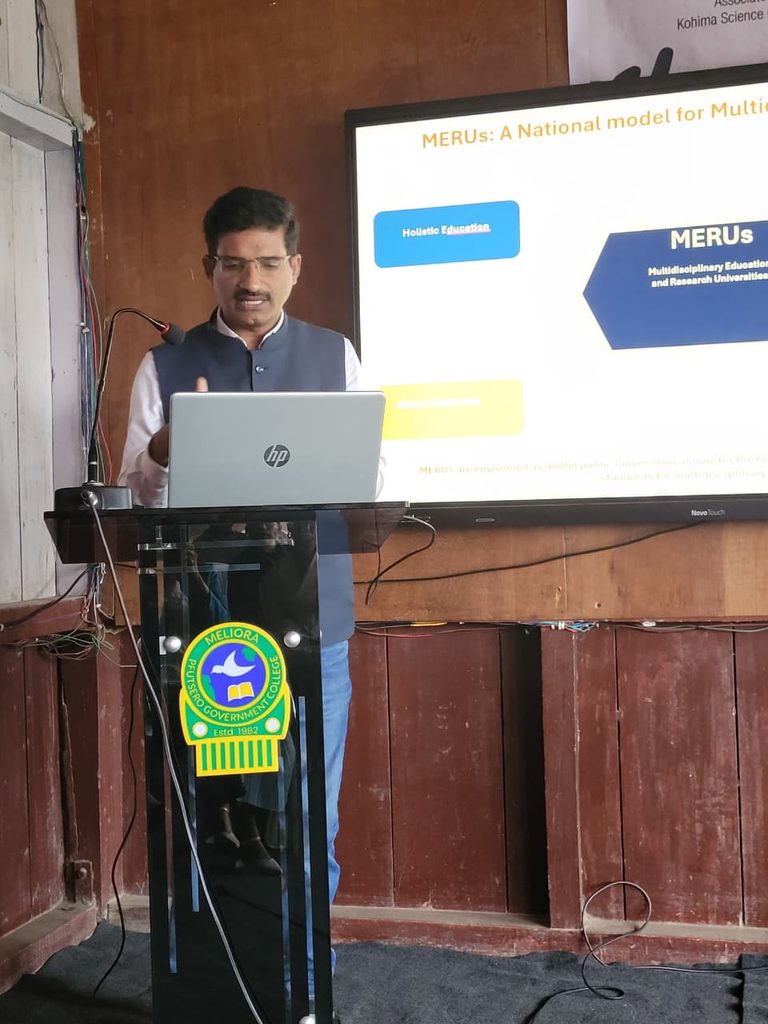
The first technical session featured Dr. Boyillapalli Venkata Rao, who spoke on “Holistic and Multidisciplinary Education under NEP 2020.” The session was moderated by Dr. Thungdemo N Yanthan, Assistant Professor, Pfutsero Government College, and was followed by an interactive question-and-answer session.
Dr Rao discussed the incorporation of all subject parameters through multidisciplinary, inter-disciplinary and trans-disciplinary approach in education paving for criticall thinking and comprehension of perspective. He emphasized that successful implementation of NEP 2020 requires coordinated efforts, institutional preparedness and appropriate policy mechanisms.
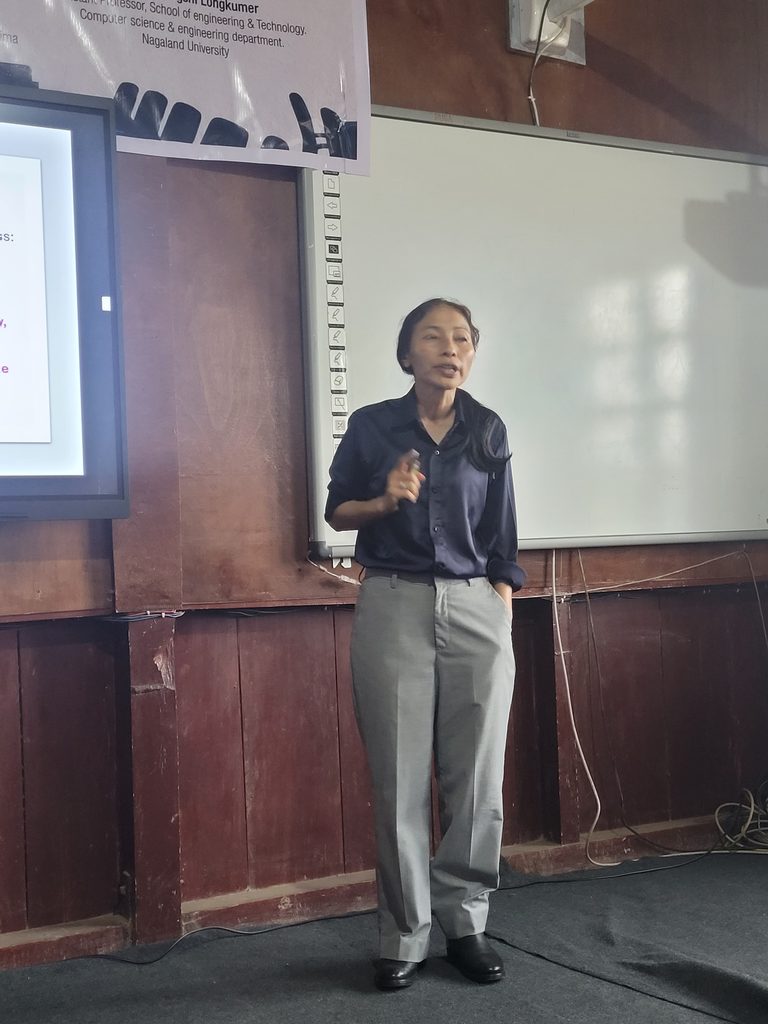
The second technical session was moderated by Mr. Chothazo Nienu, Assistant Professor, Pfutsero Government College. The resource person Dr. Samadangla, Associate Professor, deliberated on the topic “Implementation Strategies and Challenges of NEP 2020”.
This session provided important insights on the challenges, especially local challenges and the strategies that can be implemented to push forward NEP 2020. Dr. Samadangla discussed strategies such as incorporation of SWAYAM and strategic structuring of relevant courses like MDC, SEC, VAC, building channels between affiliated colleges and university along with effective communication of grievances to the parent body(HE and NU). Creation of core committee or task force in all colleges for better understanding of NEP 2020 was also proposed.
The post-lunch session featured a panel discussion on “Research Innovations and Digital Learning under NEP 2020,” moderated by Mr. Zhovi Dukru, Assistant Professor, Department of Political Science. The panel discussion brought together perspectives on the role of research, indigenous knowledge and emerging technologies in higher education.
Dr. Samadangla presented a key discussion point on “Revitalizing Naga Traditional Knowledge Systems through Research & Curriculum Development,” emphasising the significance of integrating indigenous knowledge into research and curriculum development.The session thus emphasised the need for a careful balance between documentation, research, curriculum integration and community ownership in the revitalisation of Naga Traditional Knowledge Systems.
Akangjungshi Longkumer spoke on “Artificial Intelligence (AI) in Research,” highlighting the emerging role of AI in contemporary academic research. He noted that “AI should be used as a tool for thought. AI should challenge, it should not obey”.The key takeaway was that AI should complement rather than replace human intelligence, with critical thinking and human judgement remaining central to meaningful research.
During the discourse, issues and challenges faced by the university and colleges regarding curriculum, internship, revitalization of indigenous knowledge system, use of AI and others were addressed.
The programme concluded with remarks by Ms. Mhabeni W, Assistant Professor, Department of Sociology, who reflected on the key themes and discussions of the seminar.
The seminar provided a platform for faculty members and participants to engage with the transformative vision of NEP 2020, particularly its emphasis on multidisciplinary learning, flexibility, research, digital education, indigenous knowledge and a more learner-centred approach to higher education. Participants of the seminar includes academicians from Pfutsero Government College and Phek Government College.